Product Photography Brief: A Checklist Before Contacting SCI
A product photography brief helps you explain what your business needs before speaking with a studio. Choosing attractive reference images is only part of the task: the photographer also needs to understand where the images will appear, which product details must remain accurate, and what outputs you actually need.
Shaniba Creative Industry (SCI) describes itself as a commercial photography studio in Yogyakarta, with product photography, portraits, and photo editing and retouching as its core services. Its FAQ asks clients to consider their concept and references before consultation.[1] Use the checklist below to record your needs, then discuss options and scope during consultation.
Daftar Isi
Start with intended use, not a list of visual styles
Explain where the photographs will be used: a catalog, a website product page, social media, or campaign materials. Different uses may call for different compositions. If your designer will add a headline or promotional text, describe the need for clear space as a request to discuss with the studio.
Avoid a brief that simply says “make it look good.” Replace it with a concrete need: “We need images for a product page, with readable labels and one composition that leaves room for text.” You can adapt this example to your own products and intended channels.
List products, variants, and details that must not change
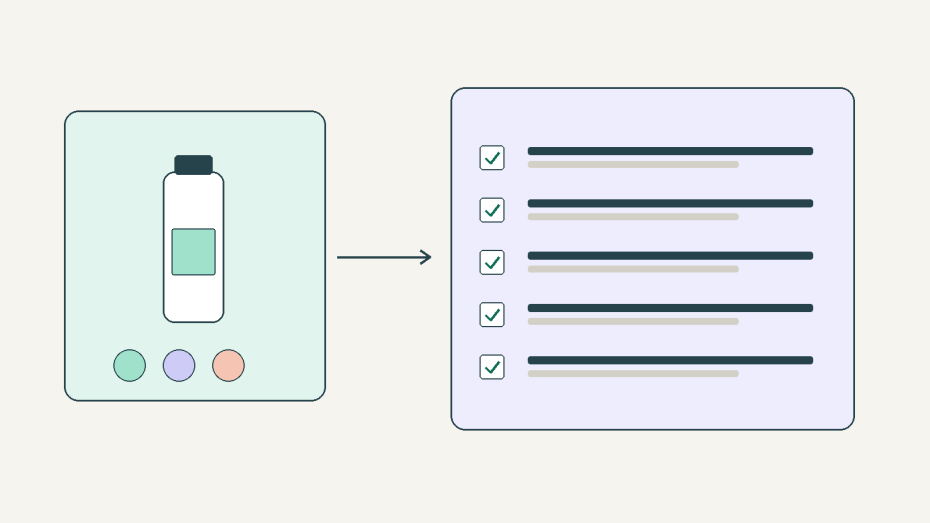
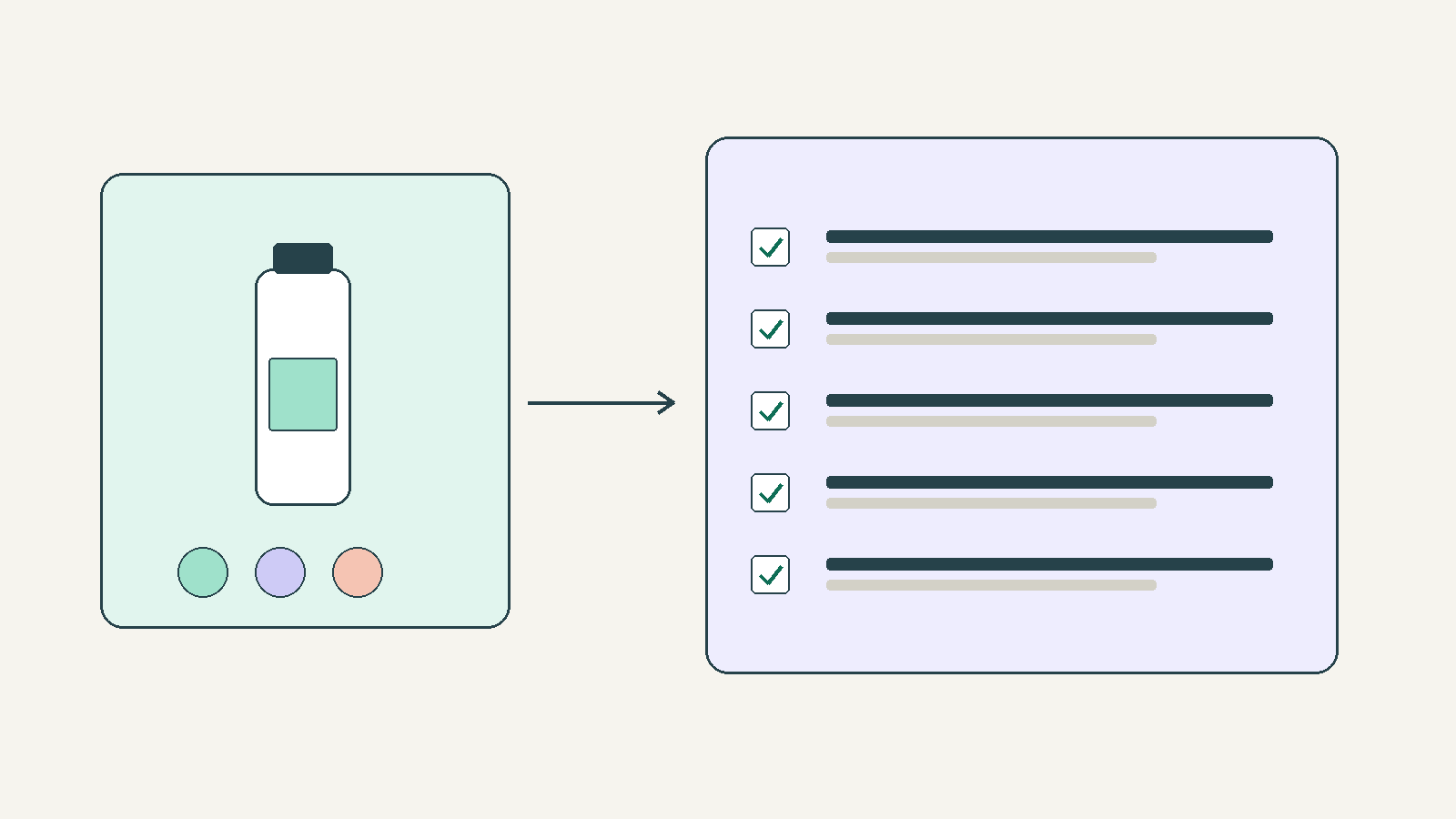
Record product names, quantities, color or size variants, and the packaging you want photographed. Identify your priority items. State which details must stay accurate, such as the bottle shape, packaging color, material texture, and label wording.
- Separate individual variant photographs from group photographs.
- Identify the sides or features that need to be visible.
- Flag details that must not be replaced during editing.
- Explain if the sample you send differs from the product customers will receive.
This list supports a practical conversation about visual accuracy. Do not assume every small defect can be repaired automatically. Ask in advance about damaged labels, dented packaging, or colors that may be difficult to represent.
Explain why you chose each reference
When sharing reference images, identify what you like: lighting direction, background color, camera angle, or mood. A reference is a communication tool, not an instruction to copy someone else’s work.
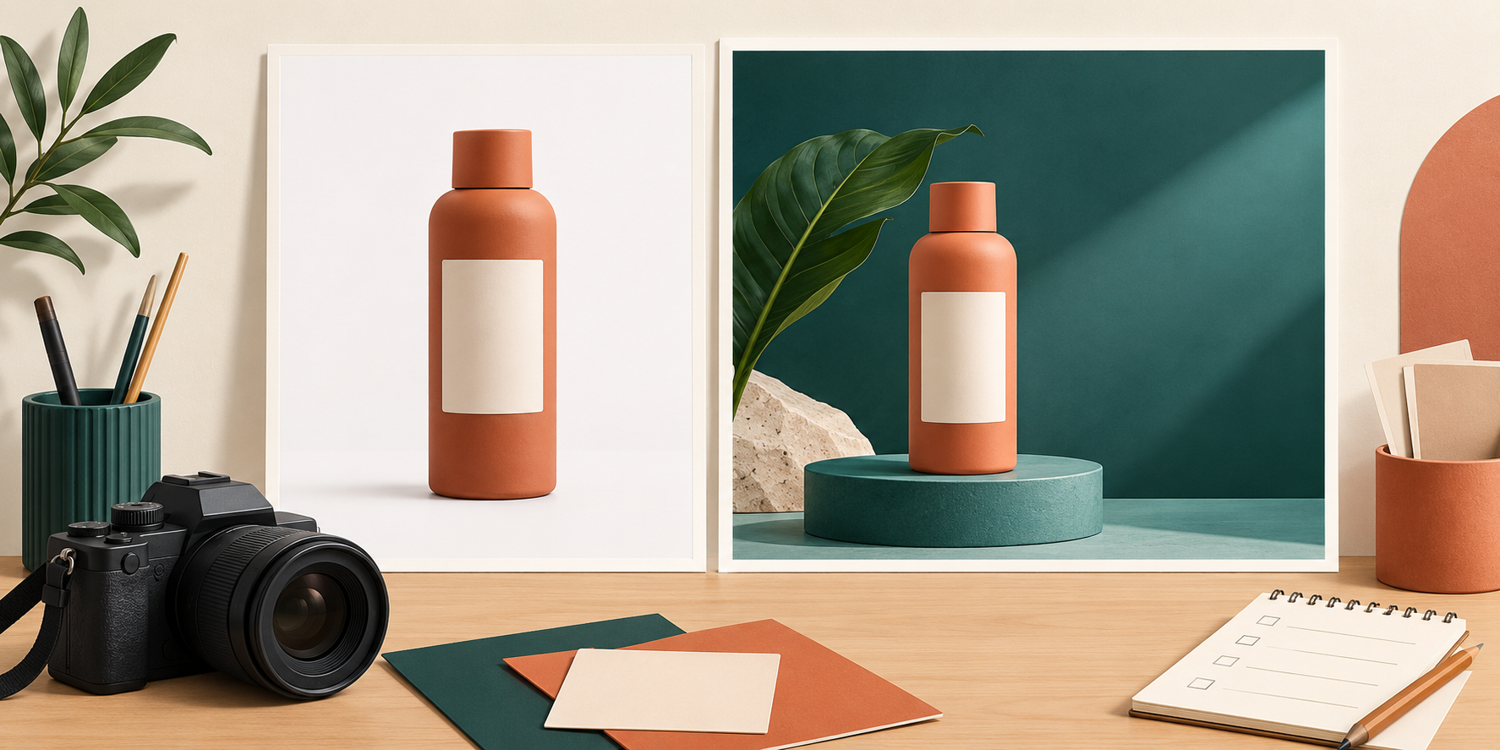
SCI’s FAQ distinguishes catalog photographs with a plain white background from themed photographs using other backgrounds and suitable props.[1] Choose a direction that serves your intended use, then discuss its feasibility through SCI’s product photography service. A reference does not automatically mean a particular prop, set, or result is included in your order.
Build your product photography brief around a shot list
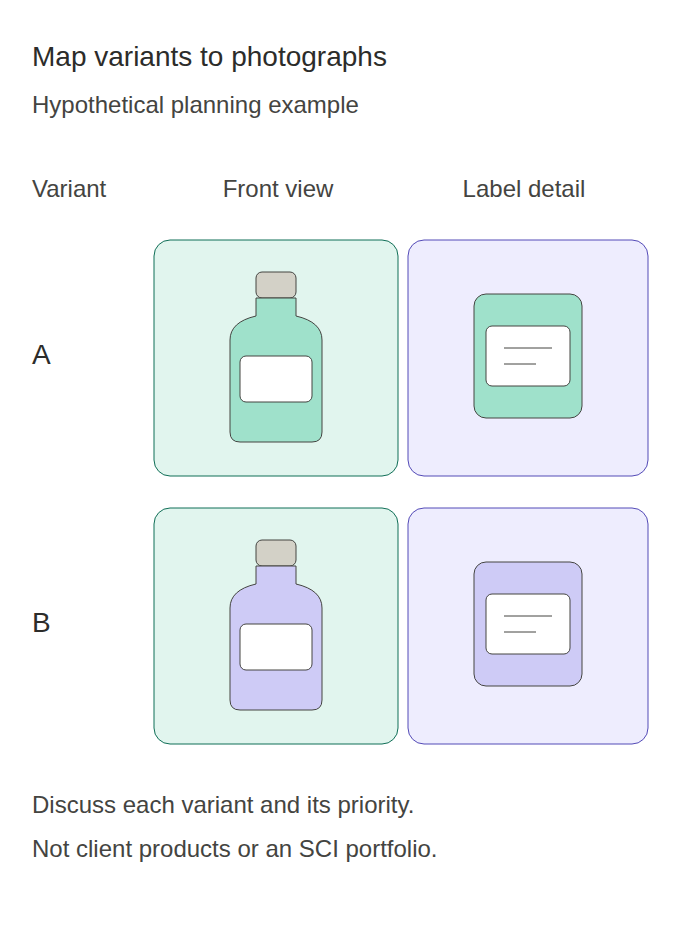
A shot list describes the images you want to discuss with the studio. It does not establish how many photographs a package includes. For example, you may need a front view, a label detail, a group photograph, and a themed composition. Set priorities in case not every request fits the agreed scope.
Include the orientations you need, the intended use of the files, and whether your designer will add text. Platform requirements, aspect ratios, resolution, and usage rights should be confirmed for your actual needs. Do not assume specifications from a general article apply to every channel.
Confirm the location and product-shipping plan
SCI’s studio is in Yogyakarta. According to its official FAQ, product photography clients can send products to the studio, and the products are returned after the order is completed.[1] The service page also describes concept preparation, product delivery, online review, and delivery of the finished images.[3]
If you are outside Yogyakarta, confirm the current receiving address, product readiness, arrival arrangements, and return process before sending anything. For fragile, perishable, or specially handled products, ask whether the requirements can be accommodated. Discuss the courier, shipping fees, and responsibility for damage as well.
Do not interpret the shipping option as evidence that SCI has studios in other cities. If you are considering an on-location session, its FAQ currently limits portrait or on-location services to the Special Region of Yogyakarta.[1] Discuss your exact location and requirements before making plans.
A short template you can complete
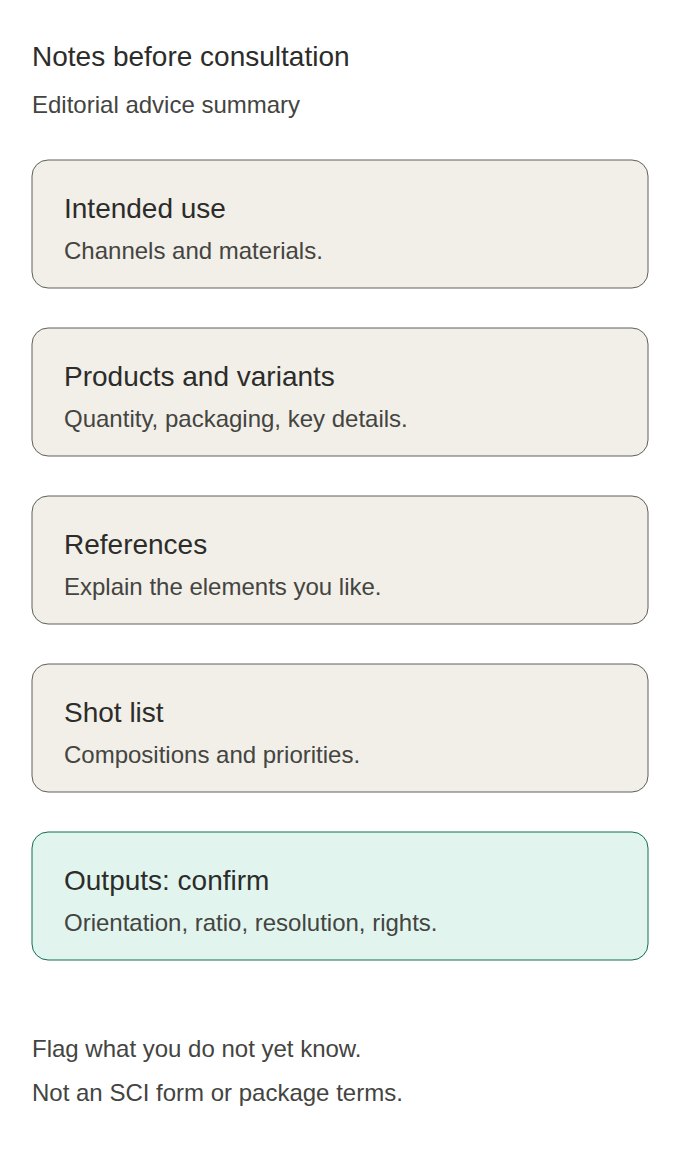
Use the following list as consultation notes. Fill in what you know and flag open questions. There is no need to invent answers just to make the brief appear complete.
- Intended use: the channels and materials that need photographs.
- Products and variants: quantities, colors, sizes, and packaging condition.
- Important details: what must be visible and must not change.
- Concept and references: the visual direction and your reasons for choosing it.
- Shot list: required compositions and their priority.
- Outputs: orientations and technical needs to confirm.
- Location or shipping: your plan for bringing or sending products.
- Timing and budget: your constraints, not an estimate from the studio.
- Open questions: props, reviews, usage rights, and product returns.
Bring the checklist to consultation and agree on scope
SCI’s product photography page mentions review of raw and final photographs, with revisions subject to its terms and conditions.[3] Ask what can be reviewed and which revision limits apply to your order; do not assume unlimited revisions.
A useful product photography brief does not have to be long. It should help the studio understand your needs, identify unanswered questions, and agree on the scope with you. Prepare these notes, then use Shaniba Creative Industry’s official consultation portal to discuss the next step.[2]
Official sources
- [1] Shaniba Creative Industry identity, address, and FAQ.
- [2] SCI contact and consultation portal.
- [3] SCI product photography service page.
Share this post to: