

Outside Yogyakarta? What to Confirm Before Sending Products to SCI’s Studio
Based outside Yogyakarta and considering product photography with SCI? Before sending products to a photography studio, confirm which items will be photographed, who will receive the parcel and how the products will come back to you. A short conversation before dispatch can prevent a parcel arriving without arrangements that fit your shoot.
Shaniba Creative Industry’s product photography service page describes agreeing on a concept and sending products, starting the session after the products and deposit have been received, then delivering files online and returning the products. Confirm the receiving and return arrangements for your particular items before booking a courier. The service details are available on the Indonesian page.[1]
Daftar Isi
Confirm before sending products to a photography studio
Start with the SCI consultation portal. Share a simple product photograph, the number of units and variants, approximate dimensions and the photographs you need. Mention anything fragile, perishable, surface-sensitive, liquid-filled or dependent on particular storage conditions. Do not send a parcel on the assumption that every item can automatically be accepted.
Ask whether your items are suitable for the planned session. Confirm the current receiving address, recipient name or contact, order-identification instructions and an agreed receiving time. Use the latest information from that conversation, rather than an old screenshot or an assumption that the studio can receive a parcel at any time.
Keep arrival and photography dates separate. The session starts after the products and deposit have been received. Agree on the shoot date and turnaround time for your order separately. Explain when you need to use the photographs and confirm the schedule directly before promising a date to your marketing team.[1]
List the products and record their initial condition

Prepare a simple inventory with each product name or identifier, colour variant, quantity and any accessories travelling with it. If retail packaging will appear in the photographs, identify which packaging must be retained. A protective shipping carton and packaging that forms part of the product’s presentation have different jobs; make that distinction clear in the brief.
Photograph each item before wrapping it, including important sides, labels, reflective surfaces and any existing marks. These references help explain initial condition and visual requirements. They are not a guarantee that a courier will accept a damage claim, and they do not replace the applicable shipping terms.
For a hypothetical example, you might send two differently coloured mugs and one retail box. The inventory should specify two mugs and one box, not simply “ceramic products”. Explain whether the box needs photographing, whether each colour needs separate photographs and which details must be shown. This makes it easier to connect the physical items to your shot list.
Avoid placing identifying stickers on surfaces that could be damaged or need to look clean in the photographs. Choose identification methods suitable for the manufacturer’s handling instructions, and ask if you are unsure. For valuable or hard-to-replace items, first discuss whether sending them is an appropriate option at all.
Match protection to the goods and your courier’s rules
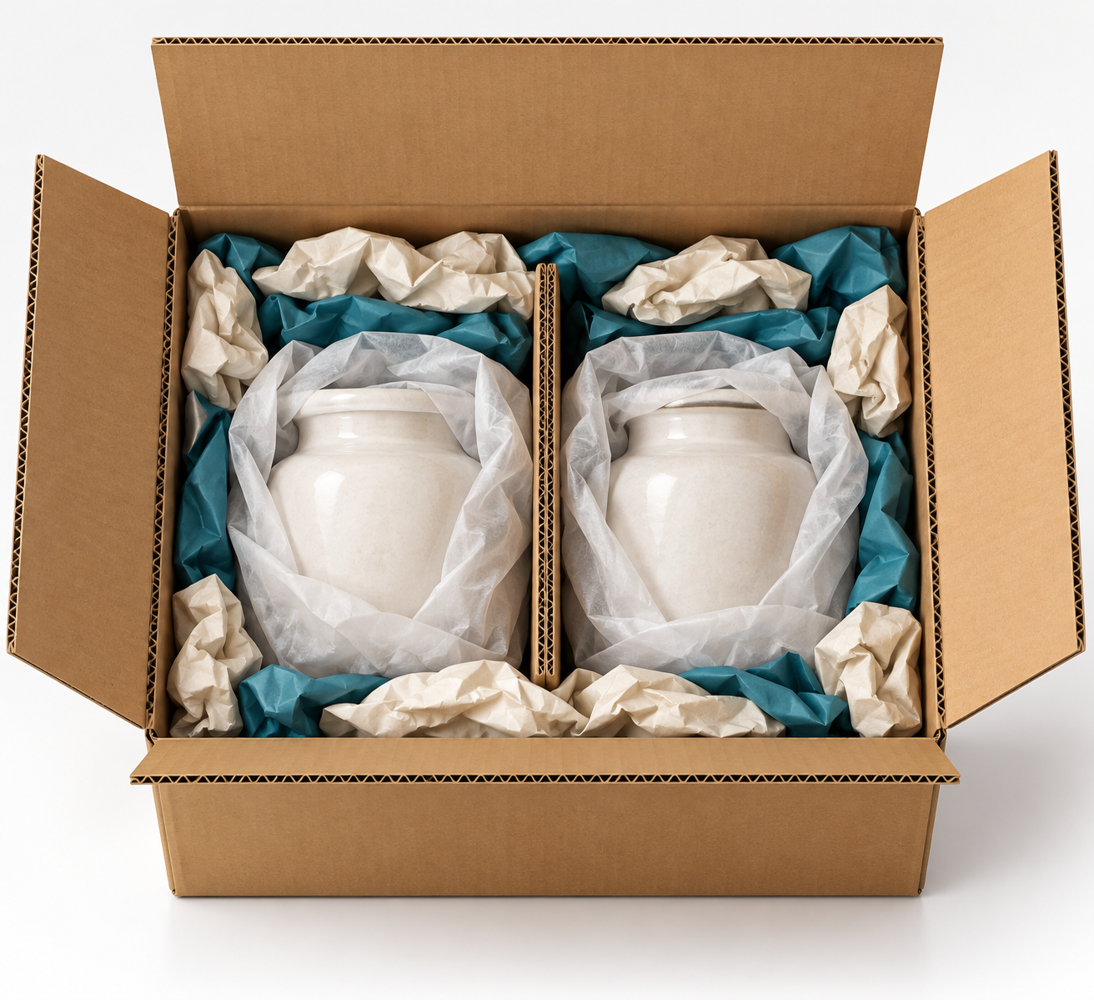
DHL’s packaging guidance recommends protective filler around the contents, filling empty space and preventing items from touching the outer packaging or each other. These principles explain why a tidy-looking carton is not, on its own, evidence that the contents are adequately protected.[2]
Treat this as general guidance, not a universal packing recipe. Cushioning and carton strength need to suit the size, weight and vulnerability of your goods. Follow the product manufacturer’s handling instructions and the rules of the courier you actually select. The illustration here shows separation and cushioning concepts, not certified protection dimensions or an SCI operating procedure.
Do not assume that a “fragile” label replaces appropriate packaging. For liquids, restricted materials, perishables or temperature-sensitive items, first ask about both studio acceptance and courier transport requirements. If suitable handling remains unclear, postpone dispatch until you have adequate answers.
Agree on the return arrangements before dispatch
Before dispatch, agree on the return details: the return address and recipient, who arranges the shipment, packaging choices and applicable costs. Confirm delivery costs, courier choice, available cover and each party’s responsibilities before you approve the shipment.[1]
If products leave your office but need to return to a warehouse, say so at the outset. Ask how accessories and retail packaging will be recorded, when return shipment can be arranged and how you will receive tracking information. Do not assume that the products’ return date and the photographs’ delivery date are the same.
Keep a summary of the agreed arrangements and dispatch records where the relevant people can access them. Share tracking details through the agreed channel rather than posting private addresses or contact details publicly. If a problem occurs, use your product records and communications as a starting point for discussion, not as proof of an assumed cause.
A short checklist for your consultation
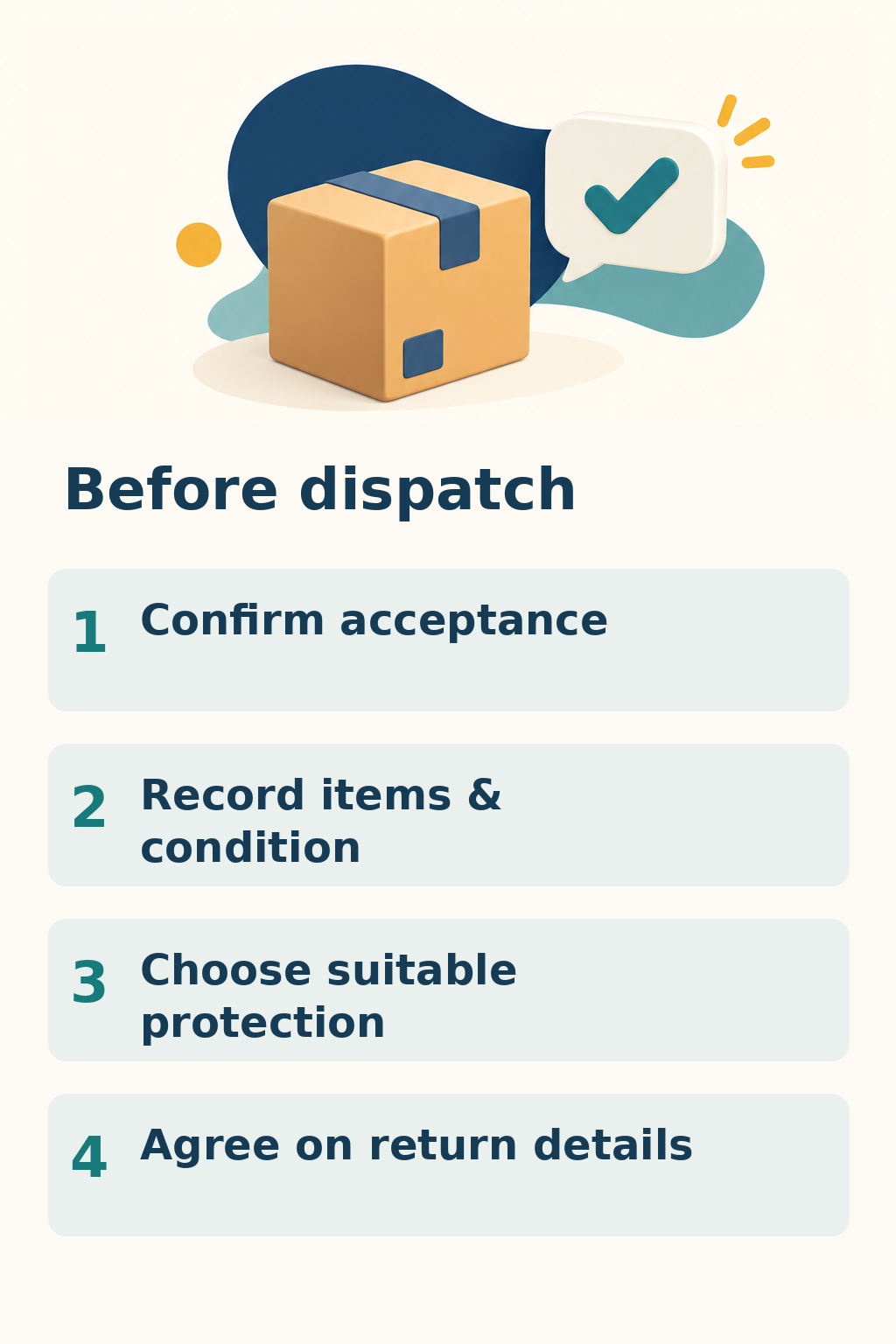
Before closing the carton, review four points: acceptance and scheduling have been confirmed; the inventory and initial condition are recorded; protection suits the goods and courier requirements; return arrangements and costs have been discussed. This is a preparation checklist for you, not confirmation that SCI has approved a particular parcel.
You can adapt this opening message: “I’m based outside Yogyakarta and would like photographs of [product type], [quantity/variants]. Here are condition references and the visual requirements. Can these items be sent for the proposed session? Please confirm receiving, scheduling and return arrangements before I choose a courier.” You do not need to include sensitive personal details before they are required.
Good product photography preparation is more than wrapping a parcel. The products, brief and logistical arrangements need to fit together. Contact SCI first, then decide how to proceed with sending products to a photography studio based on answers relevant to your order.
Sources and scope
[1] SCI: product photography service and workflow (Indonesian). [2] DHL: parcel packaging guidance. All images are AI-generated concepts, not client product photographs or SCI portfolio work.
Share this post to: