Product Photography Props: Glass, Mirrors and Water
Product photography props should make your product easier to understand, not harder to see. Glass, mirrors and water can add depth, a reflection or a sense of movement to a promotional image. The useful question is which effect supports your brand—and whether the label, shape and finish remain clear.
For a small business planning a shoot, start with the image’s destination. A straightforward catalogue view and an atmospheric campaign image have different jobs. Keep a clean product view in your brief, then use reflective props for selected creative frames rather than expecting one elaborate scene to cover every need.
Daftar Isi
Glass: keep product photography props unobtrusive
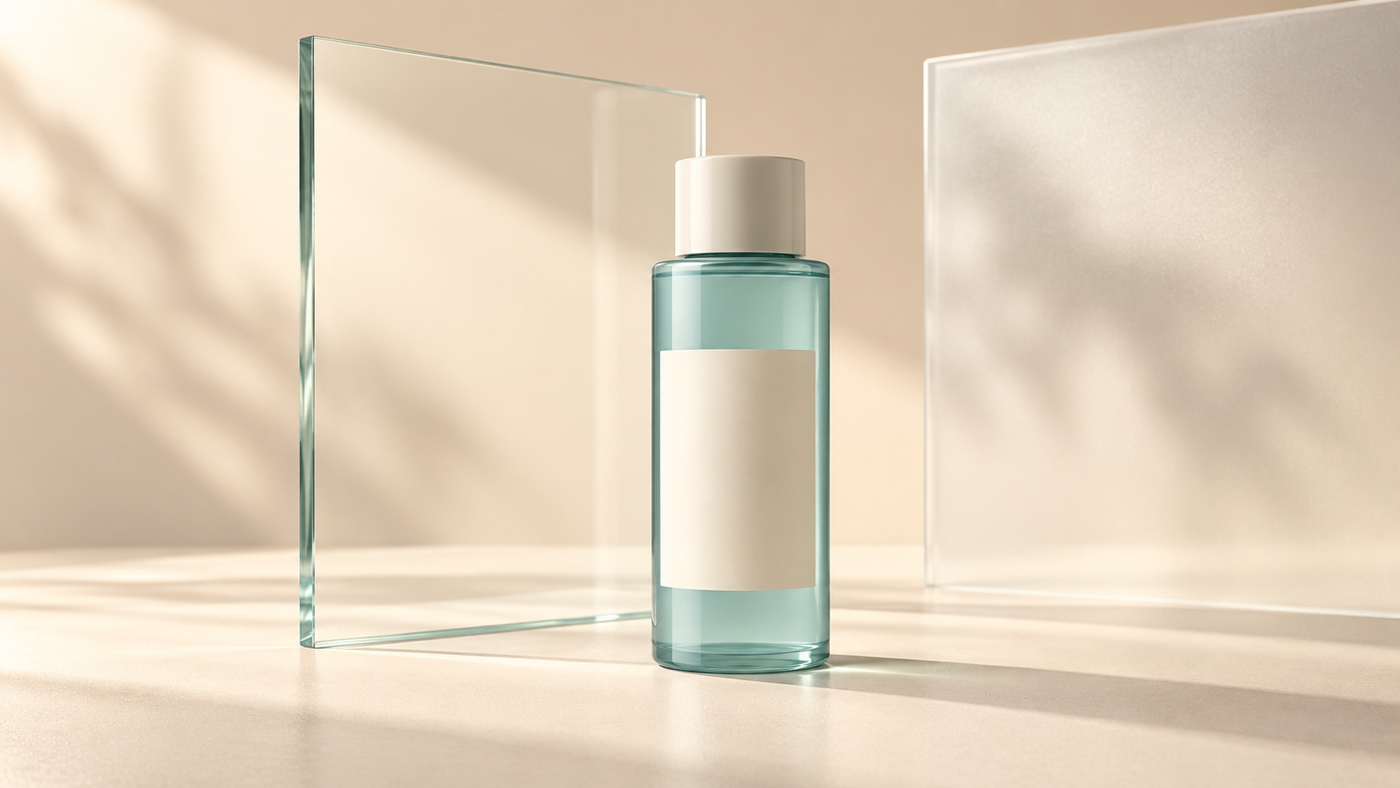
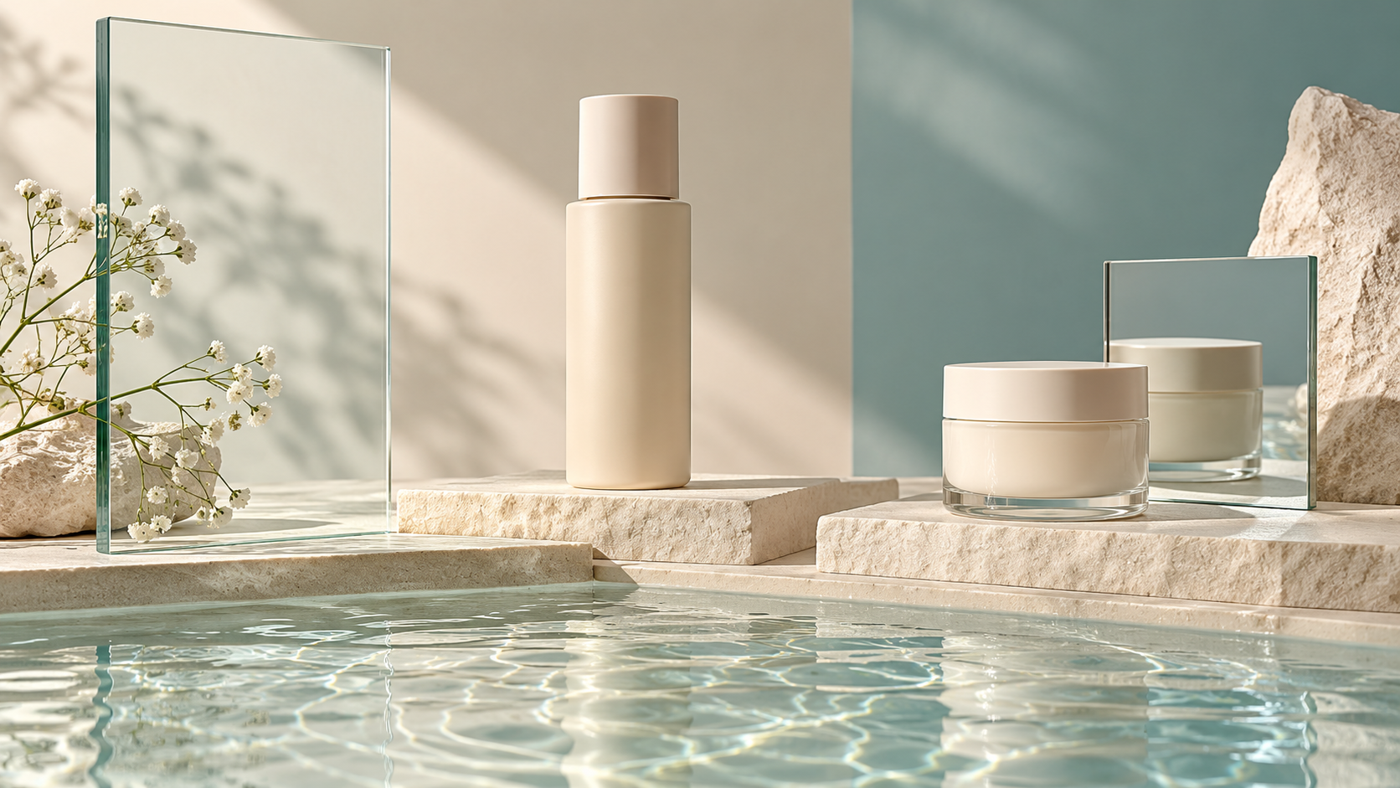
Transparent glass can introduce layers without filling the frame with a solid object. A panel behind a bottle, a glass platform or a small clear object beside it can suggest a light, uncluttered setting. Glass also reflects its surroundings, so it is worth checking what appears on its surface rather than assuming it will disappear.
Choose the position of the glass around the product, not the other way round. If a panel edge crosses the label or a bright reflection hides an important detail, simplify the composition. Leave enough contrast between the product and the background to make its outline readable.
As a practical starting point, inspect the surface for fingerprints and dust, then compare a frame with and without the glass. The extra layer should earn its place. A useful reference image shows the kind of transparency you want; it does not require copying another brand’s arrangement.
Mirrors: decide what the reflection adds
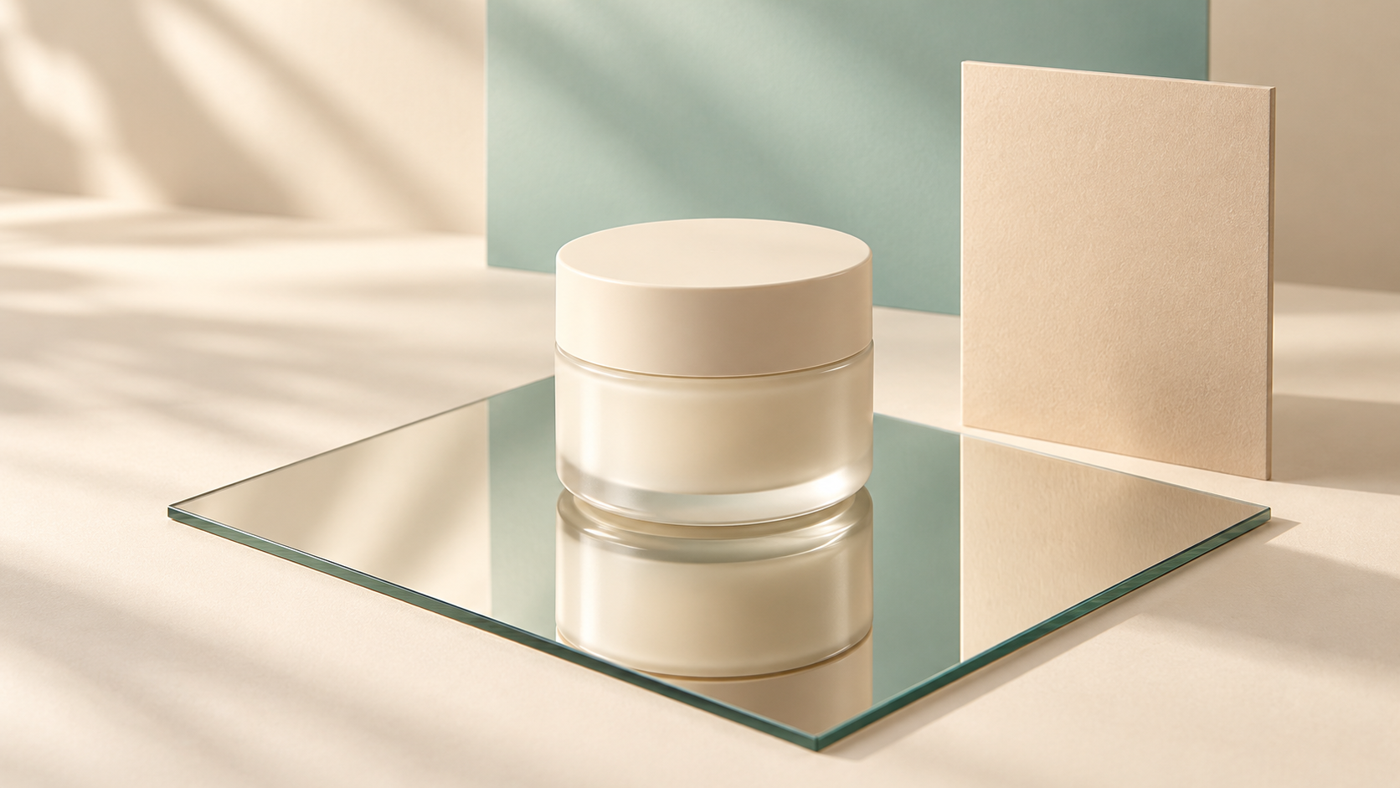
A mirror can show a second view of a product or give a still life a more structured composition. The reflection becomes another element to arrange: it may reinforce the product’s shape, but it can also compete with the real object or reveal distracting parts of the set.
Camera position matters. Adobe’s guide to reflection photography recommends exploring different heights and angles and checking whether the photographer appears in the reflection. For a product image, the same check helps you notice unwanted objects around the set.
Look at the whole frame as well as the reflection itself. Can someone immediately identify the main product? Is the reflected label distracting? Is the mirror’s edge intentional, or does it look like an accidental line? A smaller reflected area may be more useful than a perfectly symmetrical composition.
Do not treat a mirror as an automatic shortcut to a “premium” look. A restrained reflection might suit one campaign, while a plain background better serves another. Judge it against your chosen visual references and the information your customers need.
Water: choose stillness or texture
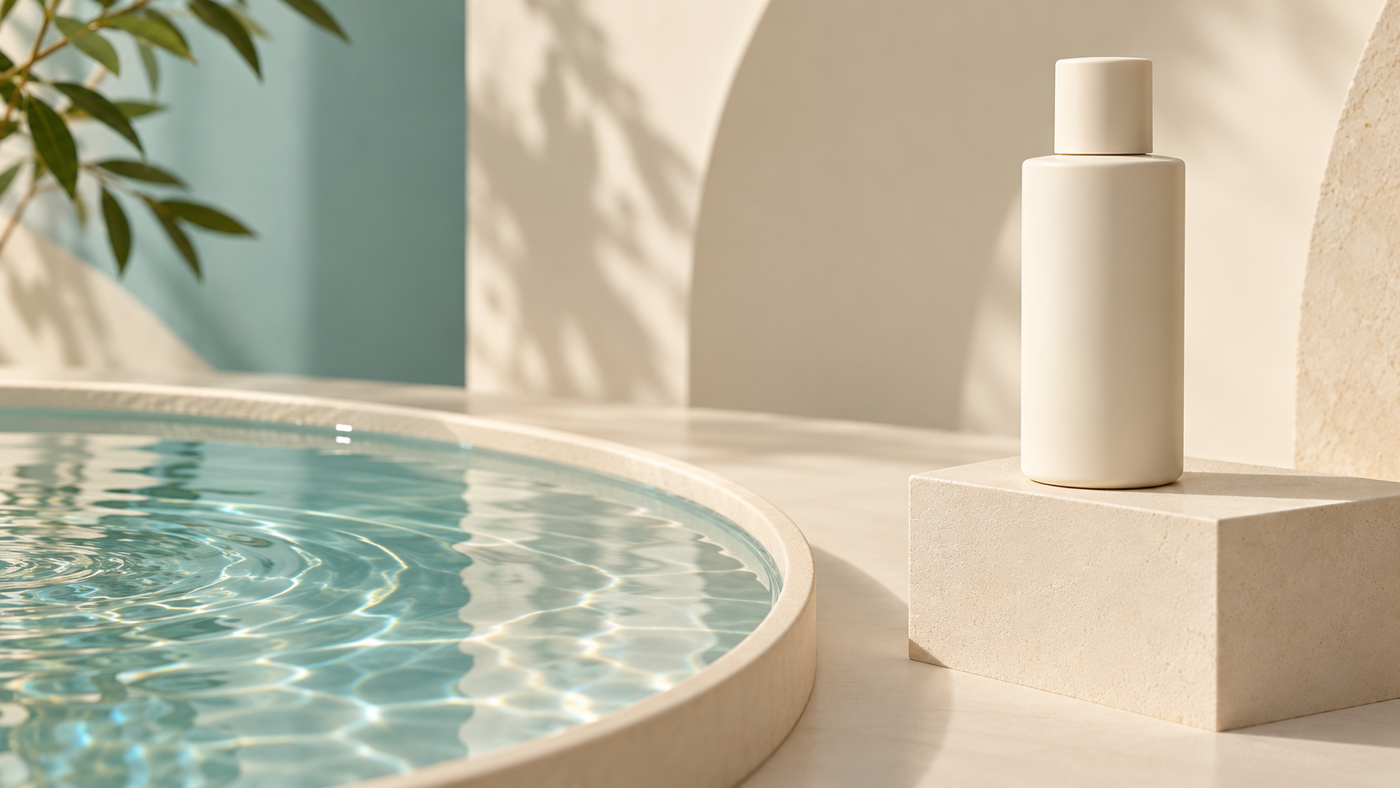
Water offers a different visual character. A still surface can carry a reflection; ripples break it into texture. Adobe notes that movement on a water surface changes the reflection, so decide whether you want a recognisable reflected shape or an abstract pattern before selecting your reference.
You do not have to wet the product to include water in the scene. A separate shallow tray or water in the foreground can communicate the idea while the product stays dry. Discuss the actual packaging and handling limits with the studio before approving any concept involving contact with liquid.
Keep the visual message honest. Water beside a skincare bottle may suggest a fresh mood, but it does not prove that the formula is natural, that the packaging is waterproof or that the product has a particular benefit. Those are product claims, not conclusions you can draw from styling.
For your brief, distinguish the effect you want from the method used to create it. “Gentle ripples beside a dry product” is a clearer request than “make it dramatic.” The photographer can then discuss an appropriate arrangement and any practical limits without guessing what matters to you.
Build a brief around the product
Choose one leading idea: transparent layers, a deliberate mirror reflection or water texture. Combining all three can be useful for a specific concept, but it also adds more surfaces and visual decisions. If the props draw attention away from the product, remove an element rather than adding another.
Before the session, share your product dimensions, packaging material, intended image uses and a few references. Identify details that must stay visible, such as a label, closure, texture or distinctive edge. Explain whether you need space for advertising copy and which crops you plan to use.
Review a proposed composition at a small size as well as close up. The product should still be recognisable on a phone, while a larger view should preserve the details you have agreed to show. Styling and retouching should support those details, not replace them with a more flattering but inaccurate product.
For a shoot with Shaniba Creative Industry, you can bring these references to the product photography service discussion. Share the product, the image’s destination and the reflective effect you prefer, then contact SCI to confirm a suitable scope. The linked service page is in Indonesian.
A strong set does not need every prop available. It needs a clear purpose, an understandable product and a reflection or texture that contributes something useful to the image.
Share this post to: