

Team Portrait Scheduling: Plan Attendance and Follow-Up Slots
The visual concept is agreed, but your colleagues work different shifts. One can attend only in the morning, another is waiting for a meeting to be confirmed, and someone else replies on the day of the shoot. Team portrait scheduling needs to show more than who should arrive when: it should also distinguish people who have been photographed from those who still need a follow-up.
Start with one attendance roster shared by the coordinator and photographer. Keep it separate from the visual reference. Agreeing a background or framing does not tell you whether everyone has had their turn. This separation lets you discuss changes without treating someone who has not arrived as a completed participant.
Daftar Isi
Separate the attendance roster from the visual reference
Consider a fictional six-person team working two shifts. Five colleagues have confirmed their availability, while one cannot yet commit. Do not put all six into a sequence that looks final. Make the uncertainty visible so the coordinator knows which arrangements still need confirmation.
A headshot attendance roster can include a participant name or identifier, confirmed availability, the agreed arrival slot, a contact person and attendance status. Choose labels both sides understand. Letters A to F are enough for a discussion example; in a real session, make sure the contact person can match each identifier to the right participant without creating confusion.
Collect only the information needed for coordination. If someone needs a practical adjustment, let them discuss it directly with the contact person; a shared roster does not need medical reasons or personnel records. Decide who maintains the list and where changes should be sent. One dated version gives everyone a clearer reference than several copies with different information.
Confirm team portrait scheduling before sharing the sequence
Discuss the expected participant count, availability windows, location, arrival instructions and necessary breaks with the photographer. Do not assign a standard number of minutes per person simply because an example schedule looks tidy. A workable arrangement depends on the session requirements and what the people involved agree.
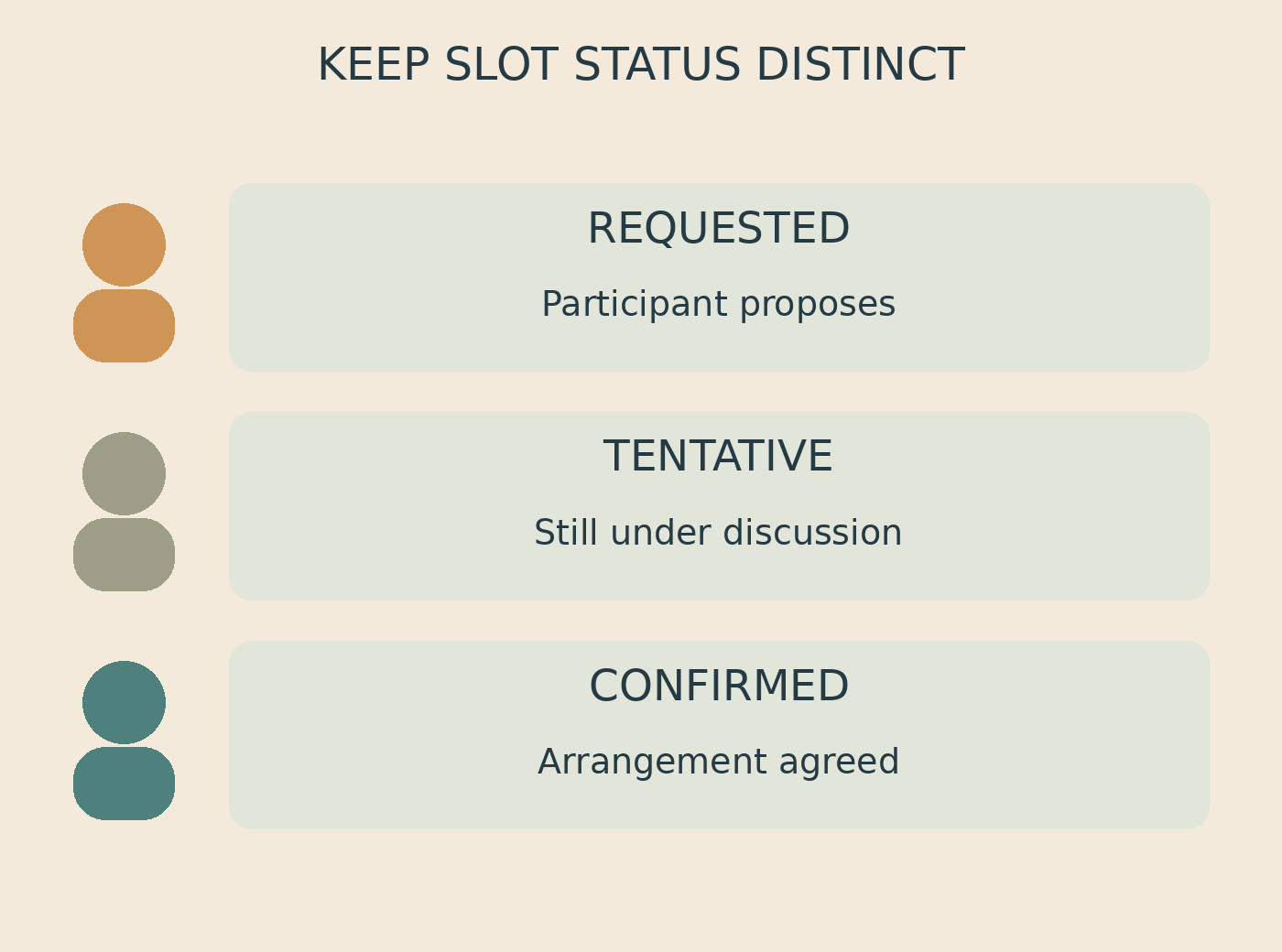
Distinguish requested, tentative and confirmed slots. For instance, participant A may request an early turn before the photographer has agreed to the sequence. Record it as a request, not a confirmation. Once the arrangement is agreed, the coordinator can send consistent instructions to participants, including how to report a change.
As an institutional example, the University of Alabama’s headshot guidance asks participants to register for a time and arrive around their selected time.[1] That illustrates the value of attendance instructions, not a session length or late-arrival allowance for your team. Follow the arrangement actually agreed with your photographer rather than copying another institution’s policy.
A short coordination message could read: “Please confirm your availability for the proposed slot. We will share the final schedule once the sequence is agreed. If anything changes, contact the coordinator through the same channel.” When the schedule becomes final, include its version date so an earlier tentative message is not mistaken for the latest instructions.
Track attendance, changes and portraits still to be taken
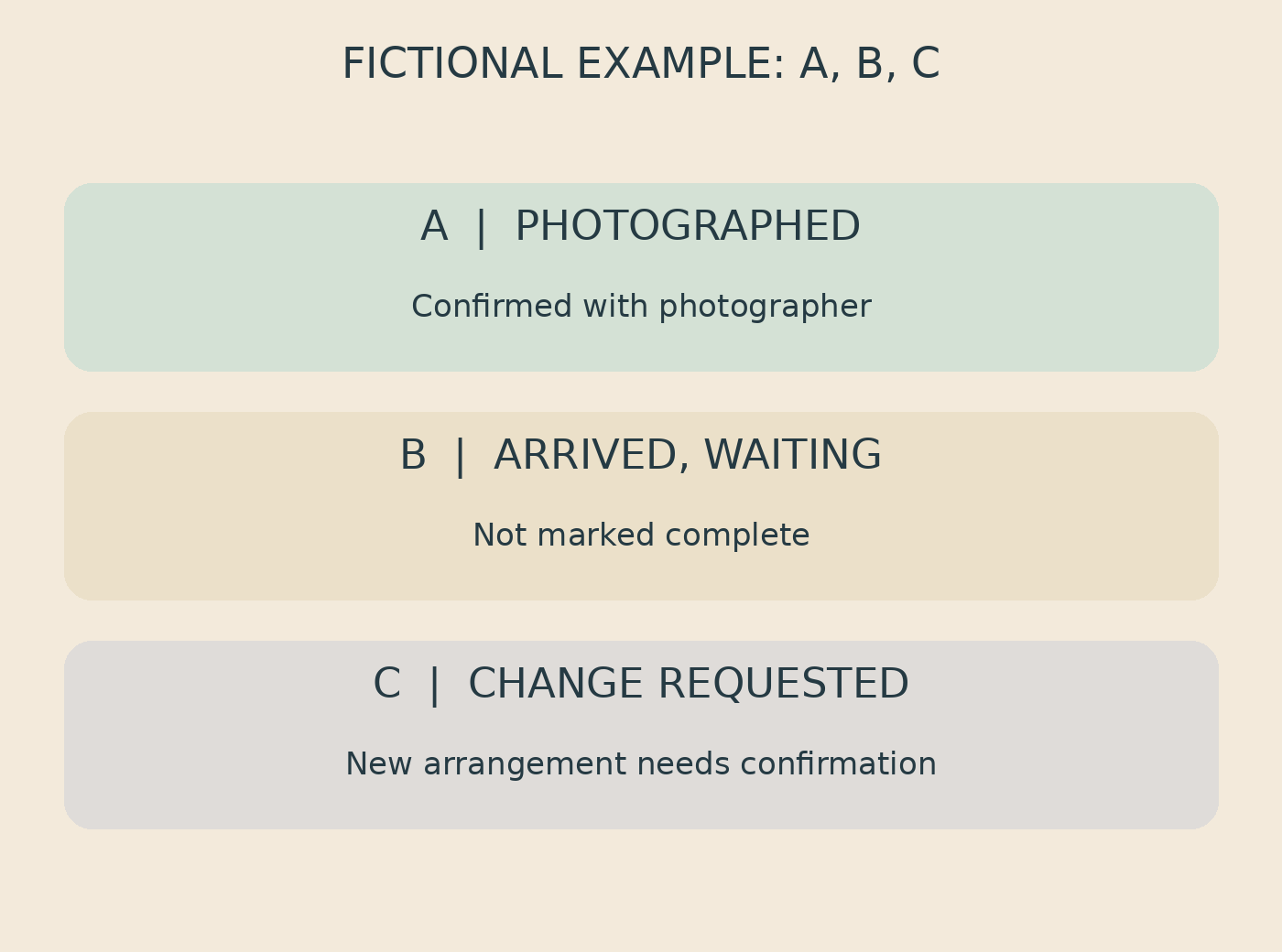
On the day, keep arrival status separate from completion. Someone who has checked in may still be waiting for their turn. Equally, a colleague who has stepped out may already have finished. Confirm with the photographer before marking a participant’s portrait as captured.
In the fictional example, A has arrived and is confirmed as photographed; B has arrived but is waiting; C has requested a different slot. These three people should not receive the same completion mark. Leave D, E and F’s entries consistent with the latest information actually received. Do not turn an empty field into “absent” simply because no update has reached you.
If someone is late, ask about the next workable arrangement. Do not quietly insert them into the queue or move another colleague’s turn without confirmation. The coordinator can record a change request while making sure the rest of the team continues to receive one consistent set of instructions.
“Photographed” does not mean a preferred image has been approved or final files have been delivered. This roster answers attendance and capture questions only. Keeping those stages separate makes the discussion clearer without combining scheduling, image selection and delivery into a single tick.
Bring the follow-up list to the next discussion
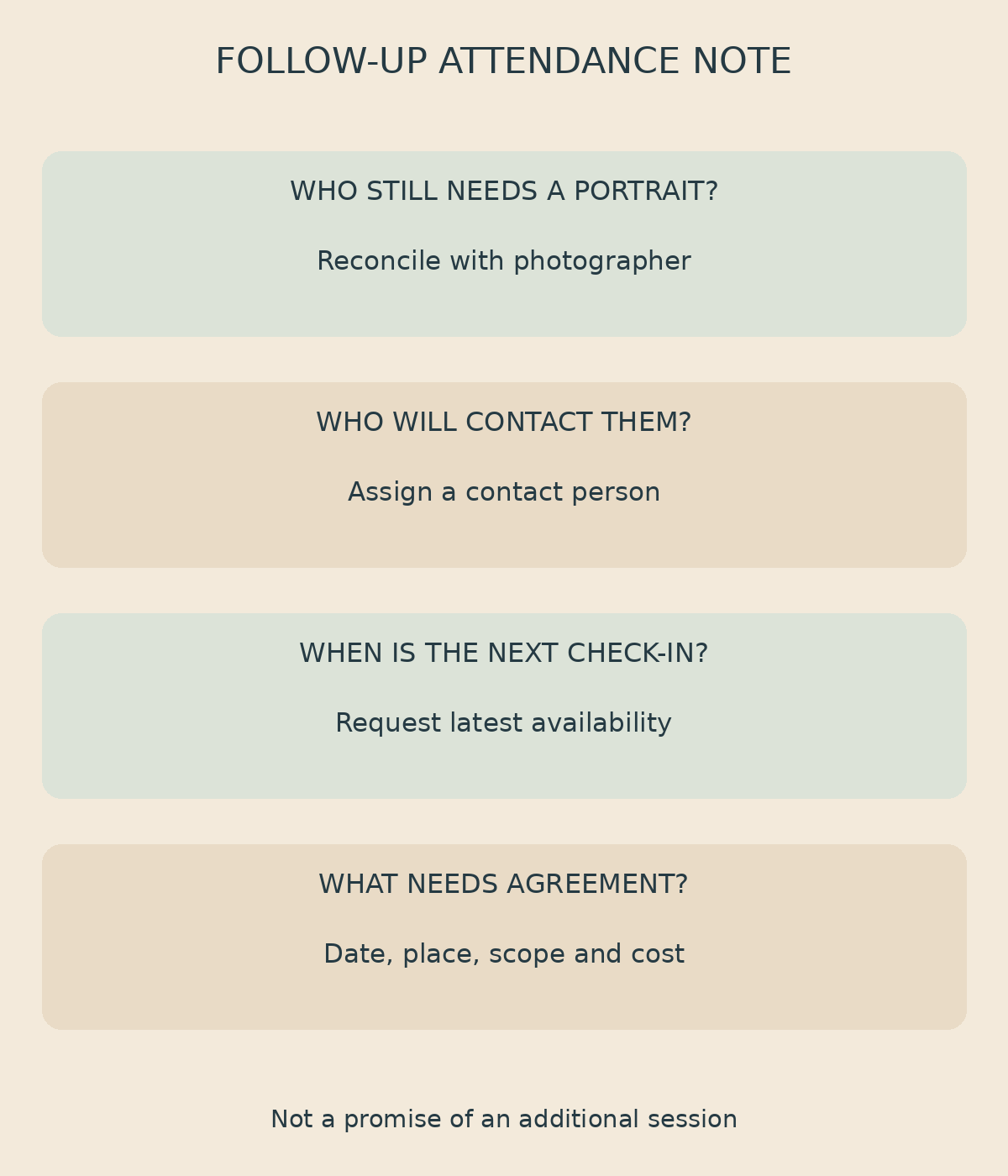
At the end of the session, reconcile the roster with the photographer. Create a short list of people still to be photographed, who will contact them and when their availability will next be requested. “Follow-up needed” is more accurate than assigning a new date that nobody has agreed.
A closing message might say: “A is confirmed as photographed. B and C still need a further arrangement. The coordinator will collect their latest availability before discussing options with the photographer.” Adapt it to the actual situation; this example is not an SCI activity report or a promise that another slot is available.
If an additional session is needed, confirm its date, location, scope and cost separately. Do not assume it is automatically included in the earlier session. A follow-up list helps you bring the right questions to the discussion; it does not guarantee availability or an identical appearance on different days.
Shaniba Creative Industry offers a business portrait photography service.[2] The SCI homepage FAQ currently limits portrait or on-location service to the Special Region of Yogyakarta.[3] When discussing business portraits in Yogyakarta, bring your expected participant count and availability through the SCI consultation portal so a workable session arrangement can be discussed.[4] Ask for confirmation rather than assuming dates are available. The portrait service page is in Indonesian.
References
[1] University of Alabama: Faculty and Staff Headshots.
[2] Shaniba Creative Industry: portrait service (Indonesian).
[3] Shaniba Creative Industry: homepage and service-area FAQ.
[4] Shaniba Creative Industry: consultation portal.
Share this post to: