
Work Props in Business Portraits: Useful Context or a Distraction?
You are considering a sketchbook or laptop to make your portrait feel less formal. Will it help people understand the context you want to convey, or become the first thing they notice instead of you? Choosing work props in business portraits starts with that question, rather than deciding which object looks most impressive on its own.
A prop is an object deliberately included in the picture. It can provide context, but it is not essential to every portrait. When planning business portraits in Yogyakarta, a useful decision goes beyond ‘bring a laptop or leave it at home’. Ask what the object should communicate, how it will look alongside you, and whether a simpler image without it would better serve a particular use.
Daftar Isi
Give work props in business portraits a clear purpose
Begin with one plain sentence: ‘I would like this sketchbook in the picture because it will appear on a page about my creative process.’ That connects the object to the intended use of the photograph. Compare it with ‘to look busy’, which does not yet explain what the reader needs to understand. If the purpose remains unclear, starting with a no-prop concept is a reasonable option.
In Nikon’s Get your props feature, photographer Bobby Kenny III describes choosing props to add a creative touch without drawing attention away from the main subject. The feature also discusses how props can add depth and visual interest. Treat this as a creative consideration, not a rule requiring an accessory in every portrait.[1]
Consider ordinary objects that are genuinely relevant: a plain notebook, a closed sketchbook, or a laptop without a distracting display. You do not have to include all of them. One object with a clear purpose is easier to assess than a collection carrying different messages. Holding an object does not establish someone’s profession, competence, or qualifications; the context of the picture should remain honest.
Review the object with the face and hands, not in isolation

A book that seems modest on a table can become a large block of colour in front of the body. An open laptop may introduce a bright screen, hard edges, and reflections. Before deciding, consider the whole composition. What do you notice first? Is the face clearly visible? Does the object help convey the purpose you wrote down, or does it compete with it?
Look at its relationship with the hands and clothing as well. The aim is not to prescribe one hand position, but to avoid a choice that feels forced or covers something important. Say if holding an item feels uncomfortable. Its physical size and how it will be brought to the session are practical points to discuss with the photographer before the concept is ready to shoot.
Consider a hypothetical choice between an open and a closed notebook. An open book presents a larger area of pages; a closed one communicates the object’s shape more simply. Choose according to its visual role, rather than assuming one always looks more professional. Blank pages are enough for an initial reference, without introducing document contents or writing that has not been deliberately selected.
If a shiny cover or a strongly contrasting colour catches the eye, ask whether it divides attention. This is a question about the particular picture, not a ban on certain colours. A prominent object may work well for one concept and dominate another. Keep the decision open until you have considered the elements together, instead of judging the prop separately from the person.
Discuss a no-prop option for a different use
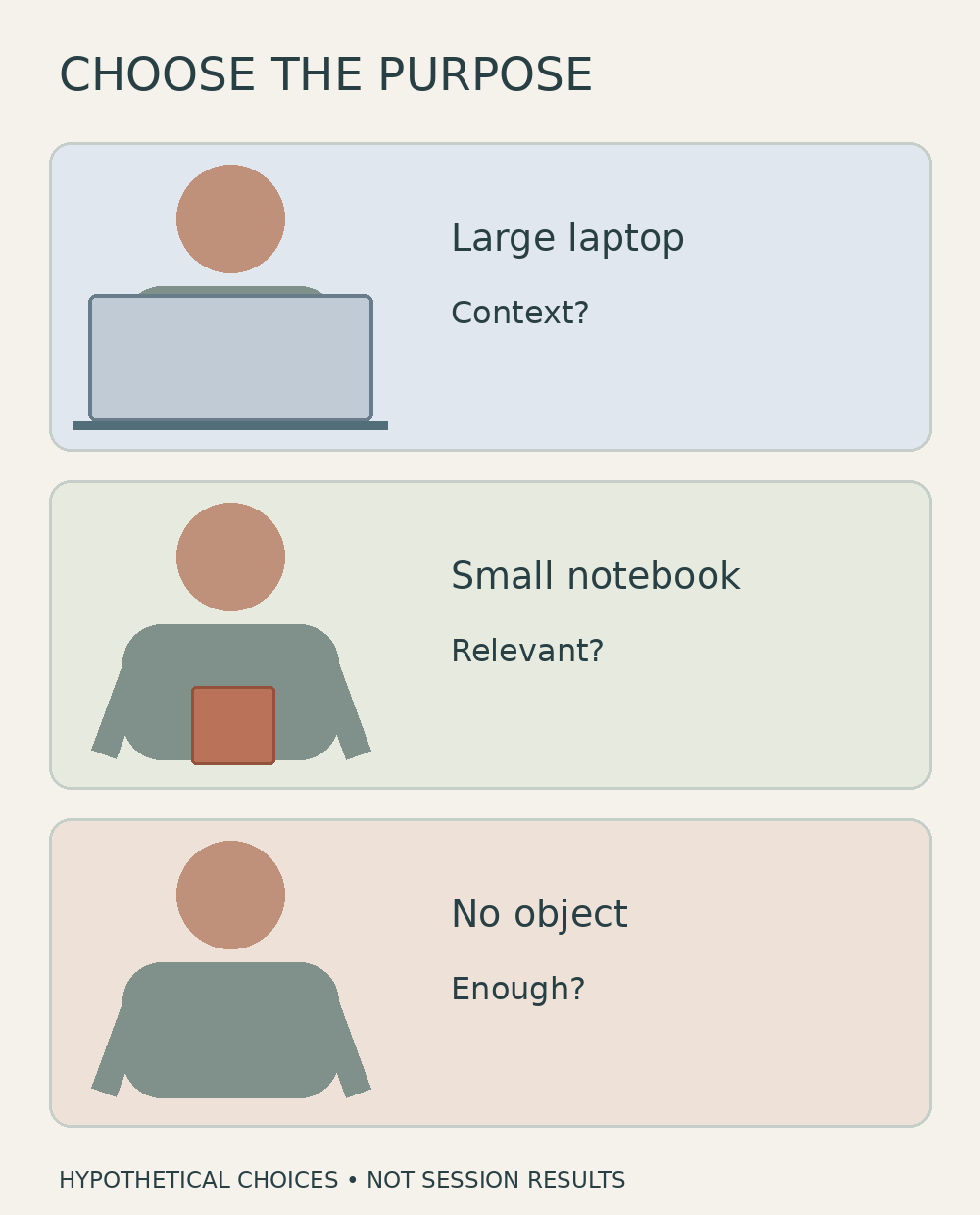
A photograph for a personal story page and a compact profile picture do not necessarily need to communicate context in the same way. At a small display size, a notebook or laptop may be hard to identify while still taking up space. Imagine the picture in its actual destination: does the object remain meaningful, or would the face alone meet the need?
Discussing a no-prop version does not invalidate the original concept. Treat them as options serving different purposes. You might explain that the contextual image is intended for an introduction page, while the simpler portrait is being considered for a profile. Confirm feasibility, deliverables, and session scope beforehand. This suggestion is not a promise of extra photographs or unlimited concept changes.
Avoid making an object carry a message you have not yet defined. If you do not want your visual identity tied closely to one tool, ask whether it needs to appear. Conversely, if the object matters to the page’s context, explain why. Including or excluding it should follow your needs, not a universal list of accessories that supposedly belong in every professional portrait.
Bring an object photo and practical questions to the consultation
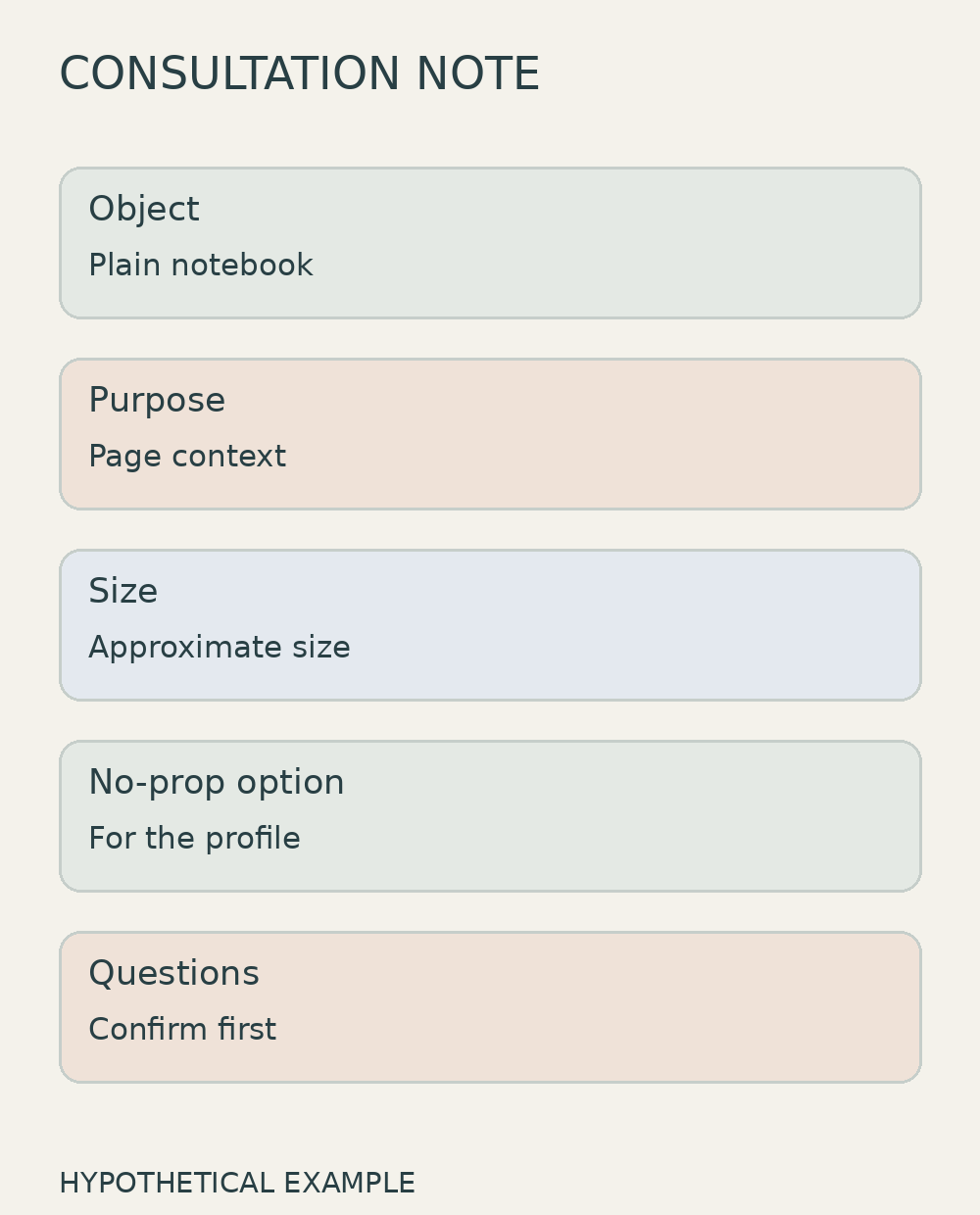
Before contacting a photographer, prepare a simple photo of the item you are considering. Add its approximate size and the intended use of your portrait. This gives the conversation a concrete starting point without asking the photographer to guess which object you mean. A short, specific note is enough; a large presentation of references pointing in different directions may not make the decision easier.
A hypothetical note could read: ‘I am considering a plain sketchbook, roughly A5 size, for a photograph on my introduction page. It relates to the drawing activity I want to describe. I would also like to discuss an option without the object for my profile. Is the concept feasible, who should bring the book, and what should I prepare?’ Adapt the details to your real item and purpose.
When discussing a business portrait photography service with Shaniba Creative Industry, send the intended use, an object photo, your reason for including it, and a no-prop alternative through the SCI consultation hub. The currently published portrait/on-location service area is the Special Region of Yogyakarta. Confirm whether the concept and item are feasible for your session rather than assuming prop provision or alternative deliverables are included. The linked portrait service page is in Indonesian.[3]
References
[1] Nikon: Get your props. [3] SCI: services and portrait-area FAQ. [2] Service details: SCI portrait photography (Indonesian).
Share this post to: